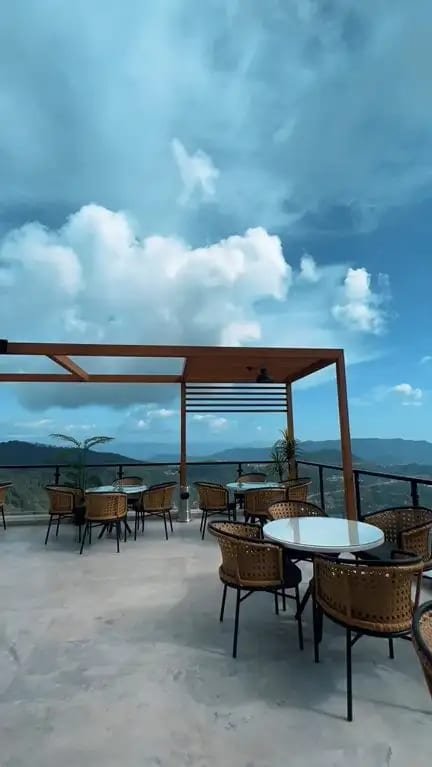
Balcony Sunrise Rituals: How to Frame the Valley View from Buree (Without Crying About the Alarm)
The light hits the Murree valley floor before it reaches your balcony. This is the first thing most guests don’t expect, and the second thing is how personally they take it. You’re standing at roughly 7,500 feet, holding a cup of tea that is still legally classified as lava, and the sun is already painting the ridgeline across the valley in copper and pale gold while your side of the hill sits in blue shadow like it wasn’t invited. The gap between those two moments lasts maybe 12 to 15 minutes on a clear morning. That window is the entire reason to build a morning around a balcony. It is also roughly the length of time it takes your tea to become drinkable, which I refuse to believe is a coincidence.
At Fiora Hotel, every room category comes with a private balcony. But having a balcony and knowing how to use it at dawn are two very different skills, like owning a gym membership and owning abs. I’ve watched guests stumble out at 7:30am, squint at a sky that’s already the colour of a hospital ceiling, and announce that they “didn’t miss much.” They missed everything. They missed the whole movie and walked in during the credits.
The 15-Minute Window That Changes the Whole Morning
Sunrise in Murree shifts by about 90 minutes across the year, because the sun also doesn’t like consistency. In late June, first light breaks around 5:05am, an hour that should be illegal. By late December, you’re waiting until nearly 7:10am, which is civilised, but you’re also waiting in temperatures that will make you question your life choices. The valley-facing balconies at Fiora Hotel mean the sun doesn’t hit you directly. Instead, you watch it work its way across the opposite ridge, down through the pine canopy, and onto the valley floor, like a very slow, very beautiful spotlight operator who has never once been in a hurry.
The air at that hour carries a specific chill, even in July. Summer mornings sit around 12 to 15°C, which sounds pleasant until you’re in it wearing pyjamas. You’ll feel it on your forearms first. Then your ears. Then your opinions. The smell is wet pine and woodsmoke from the houses below, and if it rained overnight (it did; it’s July to September; it always rained overnight), there’s a mineral sharpness in the air that vanishes completely by 9am, along with your motivation to do anything else that day.
I’d argue the best mornings are slightly overcast. Not socked in with fog, but a thin layer of cloud that catches the light and glows orange from underneath. Clear skies give you a postcard. A little cloud gives you a painting. Full fog gives you a very expensive view of a railing.
Setting Up Your Balcony Before First Light
The practical details matter more than the poetry, mostly because poetry doesn’t keep you warm. If you’re in the Deluxe Room, your balcony faces the valley with nothing between you and the opposite ridge except air and your own reluctance to be awake. The Executive Royal Suite gives you the same orientation with more space, a king-size bed, and a single bed for a third guest. This matters, because it means you can set an alarm, slip out, and leave someone sleeping undisturbed, instead of leaving someone awake, undisturbed, and plotting.
Here’s what actually works. The night before, turn the terrace chair to face slightly left of centre as you look out. Sunrise does not come from directly ahead, because nothing in life is that convenient. It swings northeast in summer and almost due east in winter. A 20-degree adjustment to the chair is the difference between watching the show and spending fifteen minutes doing the slow owl-neck of a person who did not read this paragraph.
Use the in-room kettle and coffee corner to make your cup before stepping out. Every room has enough tea for two rounds. Make the first one strong. You’re about to stand in cold air at an hour you normally only see from the wrong side, and you’ll want something that cuts through it. The second round is for after, when you’ve become a changed person and need to sit down about it.
One thing most people skip: bring the blanket from the bed. Wrap it around your shoulders. The plush bedding in the Executive Royal Suite is heavy enough to block the chill, and it’s a far better experience than sitting bolt upright in a jacket like you’re waiting for a job interview with the sun.
What You’re Actually Looking At
The valley drops roughly 2,000 feet from the balcony railing to the lowest visible point, which is also roughly how far your heart drops when the alarm goes off. On clear mornings you can trace three distinct layers: the pine-covered ridge directly opposite, about a kilometre away as the crow flies (and the crows here fly a lot, we’ll get to them), the terraced hillside below it where houses cluster in rows that were clearly not planned by anyone, and the valley floor, where mist collects in a pale band and then quietly leaves by 8am without saying goodbye.
Sound carries strangely at this elevation. You’ll hear roosters from villages you cannot see and will never find. The azaan from a mosque somewhere below reaches the balcony about 4 minutes before sunrise in summer, which functions as a natural alarm if you’ve left the balcony door cracked overnight. It is a far more dignified alarm than your phone, which will try to wake you with a marimba.
The birds have a schedule and they are stricter about it than you are. Bulbuls first, then mynas, then the crows, who seem to hold the deeds to every pine tree within a hundred metres of the hotel and would like you to know it. If you’re patient and quiet, you might catch a raptor riding thermals off the valley wall once the sun has warmed the rock face. That’s usually 30 to 45 minutes after sunrise. The raptor is the only creature here that looks like it slept in.
Check the Murree weather forecast the night before. Not for rain, since rainy mornings have their own charm, but for fog. Dense fog at sunrise means you see nothing past the railing and you will stand there anyway, out of stubbornness. Thin fog means the valley appears and disappears in waves, which is, if I’m honest, more interesting than a clear morning. It’s like the view is doing a magic trick, and you’re the only one who showed up to the show.
Seasonal Differences Worth Planning Around
Not all sunrise mornings are equal. Some are gorgeous. Some are a personal attack by the weather.
Season | Sunrise (approx.) | Temperature at Dawn | What You’ll Notice |
|---|---|---|---|
Winter (Dec–Feb) | 7:00–7:10am | 0 to 4°C | Snow on the opposite ridge, sharp air, long shadows, your own mortality |
Spring (Mar–Apr) | 5:50–6:20am | 8 to 12°C | Wildflowers on the hillside, bird activity peaks, birds extremely loud about it |
Summer (Jun–Aug) | 5:05–5:30am | 12 to 15°C | Monsoon clouds, dramatic light, wet pine scent, the horror of 5am |
Autumn (Oct–Nov) | 6:10–6:30am | 6 to 10°C | Clear skies, golden light, dry air, the only reasonable season |
Winter mornings require commitment. You’re stepping onto a balcony where the railing might have frost on it and will absolutely steal the warmth from your hand if you touch it. But the light on fresh snow across the valley is worth it. The Executive Royal Suite includes steam and sauna access, so you can go from “possibly frozen” to “possibly a soup” in under twenty minutes without waiting for the central heating to notice you.
Spring is the overlooked season. The hillside opposite blooms with wildflowers in late March and April, and the light has a softness that summer’s harsher angles can’t match. If you’re travelling with family during school holidays, this is the window I’d recommend. The kids will still not care. But you’ll care enough for all of them.
Building the Ritual: From Balcony to Breakfast
The best sunrise mornings at Fiora Hotel follow a specific rhythm. Balcony first. Then breakfast. Then a nap you will claim was not a nap. The hotel includes a complimentary breakfast buffet with every booking, and Misty Clouds, the top floor restaurant, opens early enough that you can go from your private balcony to the higher terrace without the morning atmosphere wearing off.
The rooftop sits above the room balconies, so you get a second angle on the same valley. By the time you’re eating, the light has moved on, the shadows have shortened, and the mist band has thinned or packed up entirely. It’s a different view of the same landscape, and eating breakfast while watching that transition is a specific pleasure that’s hard to replicate elsewhere in Murree, mostly because elsewhere in Murree you’d be looking at a car park.
For families travelling with kids and elders, which is most Pakistani families heading to Murree on a long weekend, the balcony ritual works as a quiet solo moment before the day gets loud. Set your alarm 30 minutes before everyone else wakes up. The kids won’t care about the sunrise. The elders will say they’ve seen better ones in 1987. You will have had the best part of the day before anyone has even started the argument about what to do first, and that argument will happen, and it will be long.
One guest on Google Reviews described the morning balcony view as “the reason we extended our stay by a night.” That tracks. The first morning catches you off guard. The second morning you know what’s coming, and you’re ready, and you have the blanket, and you look like a very smug, very warm ghost.
Framing the View: Practical Composition Tips
If you’re photographing the sunrise (and you will, we both know you will), a few things help. Your phone will overexpose the sky if you point it straight at the light, because your phone has never seen a sunrise and panics. Tap the brightest part of the frame to lock exposure there, then recompose. The valley floor goes dark, but the sky keeps its colour, and that’s the trade you want.
Shoot vertical, not horizontal. The valley’s depth is the story, not its width. Include the balcony railing or the edge of your tea cup in the bottom third of the frame. It grounds the image and separates your photo from the other forty thousand Murree sunrises on Instagram, all of which were taken horizontally by people who did not read this.
The best single frame, if you can only take one: the moment the sun crests the opposite ridge and the first shaft of direct light hits the pine trees closest to the hotel. That transition lasts maybe 90 seconds. Everything glows. The bark goes from grey to amber. Your tea turns gold in the cup. You will take eleven photos of this and keep one.
This might just be personal preference, but I think the Executive Family Suite photographs better than the rooftop because the angle is slightly lower, which puts more valley in the frame and less sky. Your mileage may vary. Your family’s patience with you standing on a balcony holding a phone at a tree definitely will.
The Morning After the Morning
Here’s the honest part. Not every sunrise delivers. Some mornings, the fog is a wall. Some mornings, you sleep through the alarm because you stayed up too late at Misty Clouds and your body has filed a formal complaint. Some mornings, the kids wake up at 4am and the quiet balcony moment evaporates before it starts, replaced by a very different ritual involving a lost sock.
But the balcony is there every morning. The valley doesn’t move. It’s remarkably reliable for something that big. And the ritual, once you’ve done it once, becomes the thing you look forward to on the second and third night, which is a strange thing to say about voluntarily getting up before 6. It changes how you think about the room. The balcony stops being a bullet point on a booking page and becomes the reason you booked, which is a lot of pressure to put on some tiles and a railing, but it holds up.
The Executive Royal Suite’s private balcony, valley-facing, with room for two chairs and a small table, is built for exactly this kind of morning. The steam and sauna waiting afterward doesn’t hurt either. Nothing about the sauna hurts. That’s the point of the sauna.
Pack a light shawl if you’re visiting between October and March. Set your phone alarm 40 minutes before the sunrise time on any weather app, because the pre-dawn light is better than the sunrise itself, which feels like a secret the sun would prefer you didn’t know. And leave the balcony door cracked open overnight so the cold air wakes you gently before the alarm does. Gently is doing a lot of work in that sentence. It will wake you.
That last detail is the one most guests figure out on their second morning. Now you know it on your first. You’re welcome. Go to bed.